Posts in Category: Tokyo 2015
Let’s English here
A helpful sign in a Matsuya in Kichijoji, Tokyo. Matsuya is a fast food chain specializing in gyudon, a Japanese beef bowl dish of immense popularity…

(Kichijoji 1-chome, Tokyo 2015)
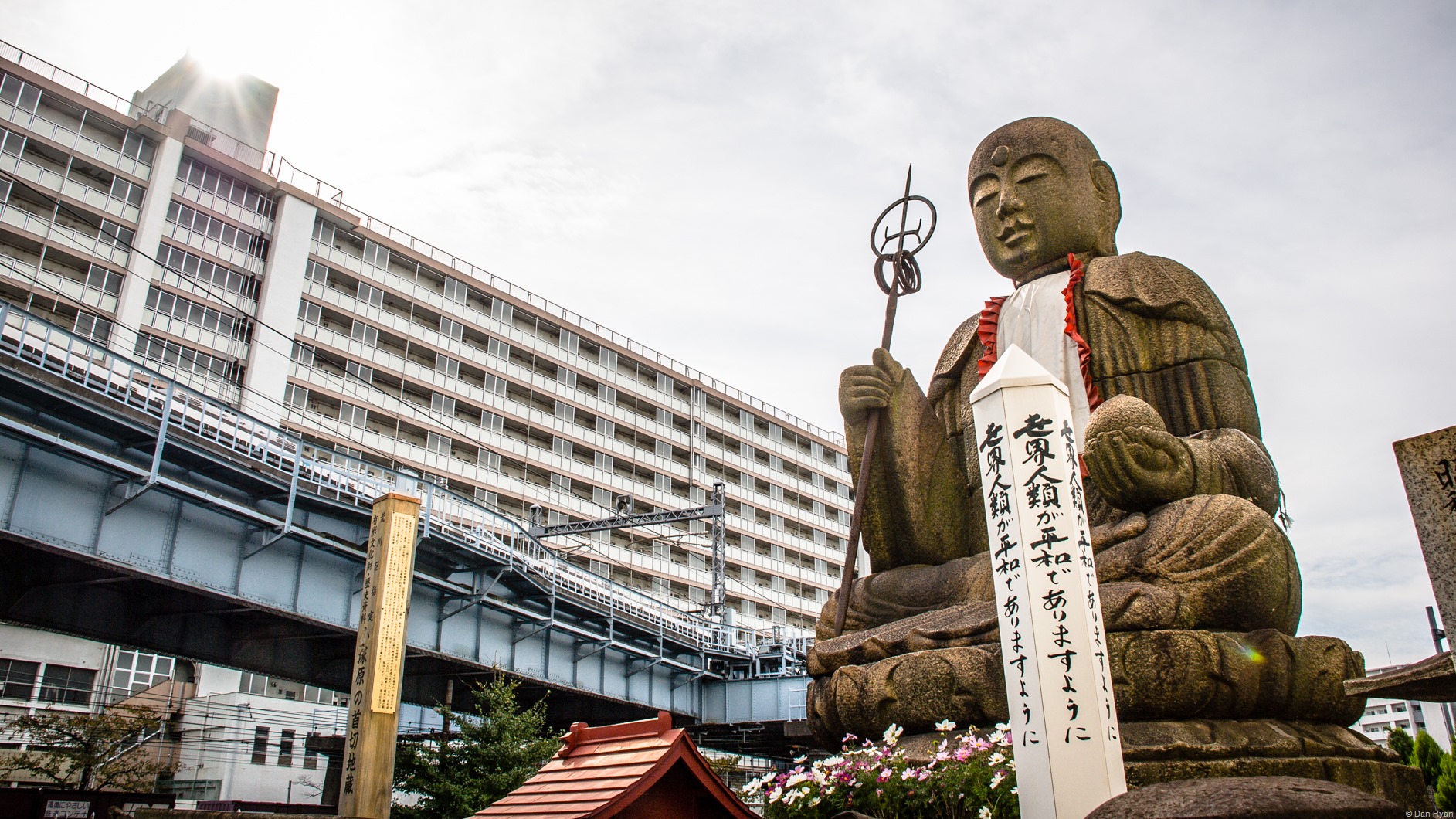
The unwavering jizō
Kozukappara is one of Tokyo’s most notorious Edo-era execution grounds. This beautiful jizō overlooks and guards the place. The grounds are a very short walk from the south end of Minami-senju Station, and so trains are constantly coming and going on elevated tracks on either side of Kozukappara. But despite its unquiet location, the jizō, in its wisdom and patience, keeps calm, unwavering watch, guarding the living from the dead and the dead from the living…
(Near Minami-senju Station, Tokyo 2015)
Greetings from television…
I was bored one afternoon last November, waiting to leave my short-term apartment rental in Nakano 5-chome to go pick up my wife at Haneda. To kill the time, I turned on the television. The TV happened to be tuned to a kid’s program on NHK Educational TV (NHK Eテレ)…
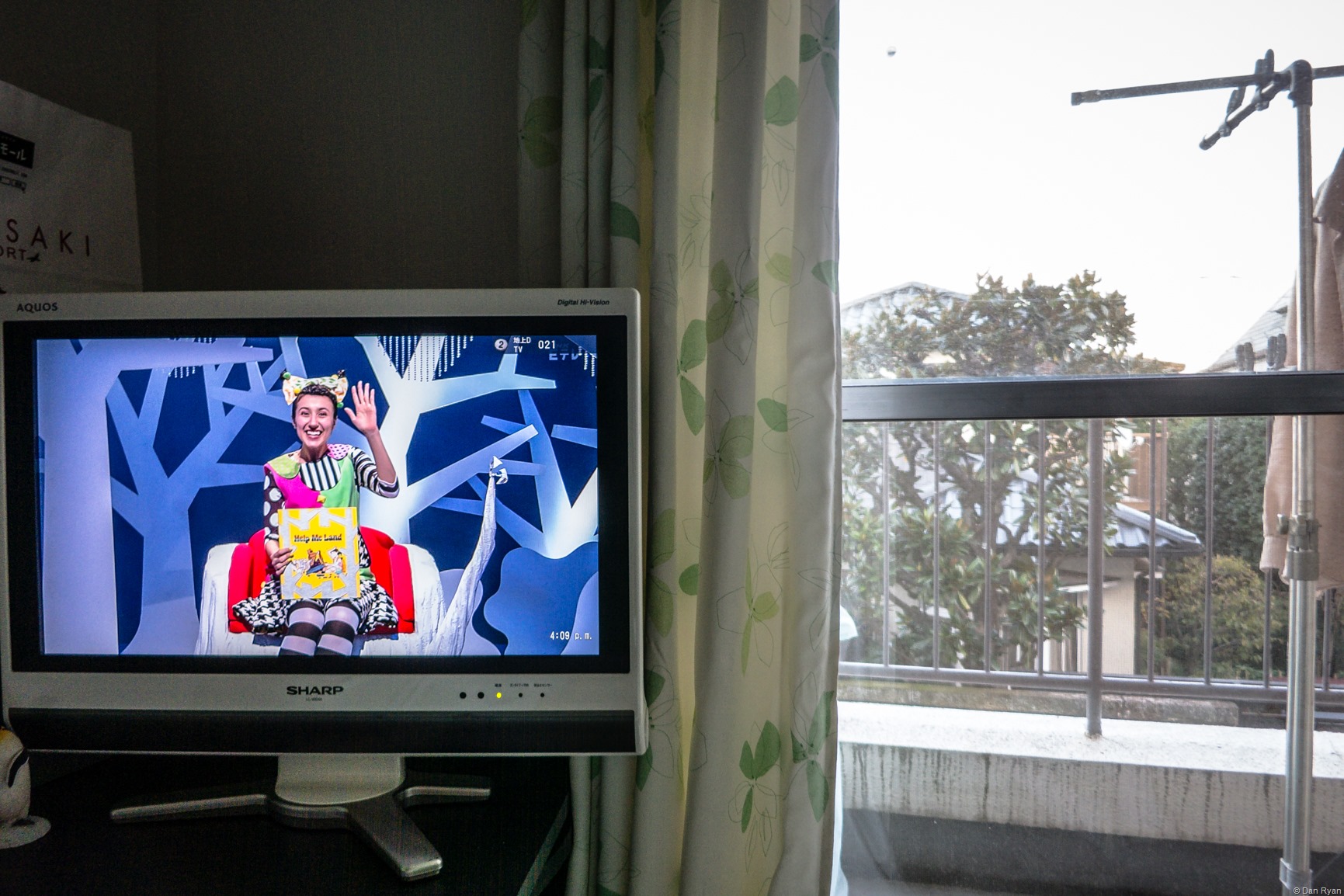
I barely understand Japanese TV, because I barely understand the Japanese language. But Japanese TV is always visually interesting, so I rolled with it for awhile, looking forward to seeing my wife.
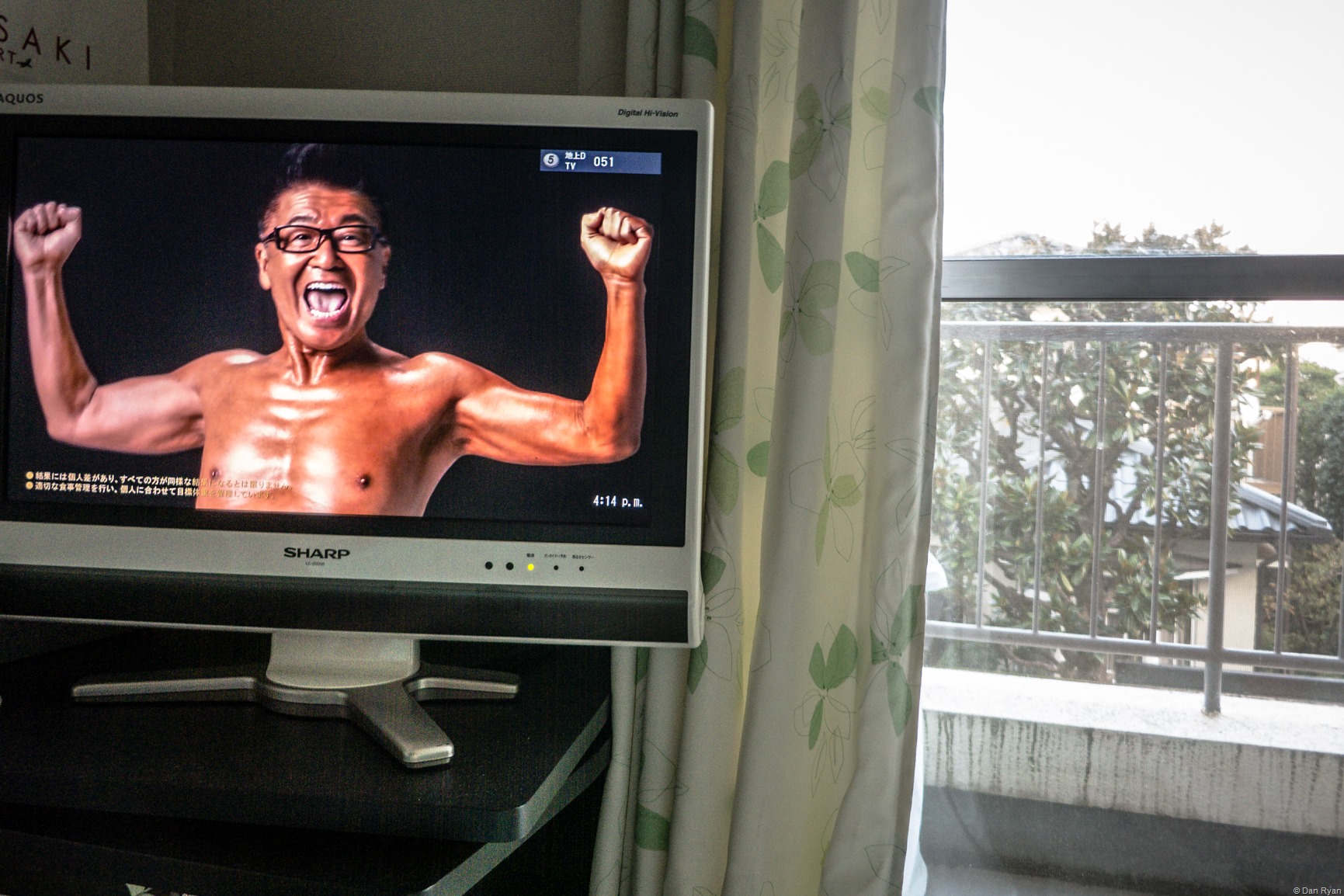
I have no idea what the shirtless guy with the obviously oiled skin was advertising…
(Nakano 5-chome, Tokyo 2015)
Bravery
He was smiling his way through Takadanobaba Station on Halloween, a night that’s crazy in Tokyo. The Yamanote Line crowd was a thick slurry of rush hour commuters and partiers in transit. His white cane made his blindness obvious. That and the cardboard mikoshi on his head made him stand out. His face held joy and purpose, and what he was doing took guts. I felt respect for him, and hoped his Halloween was happy…
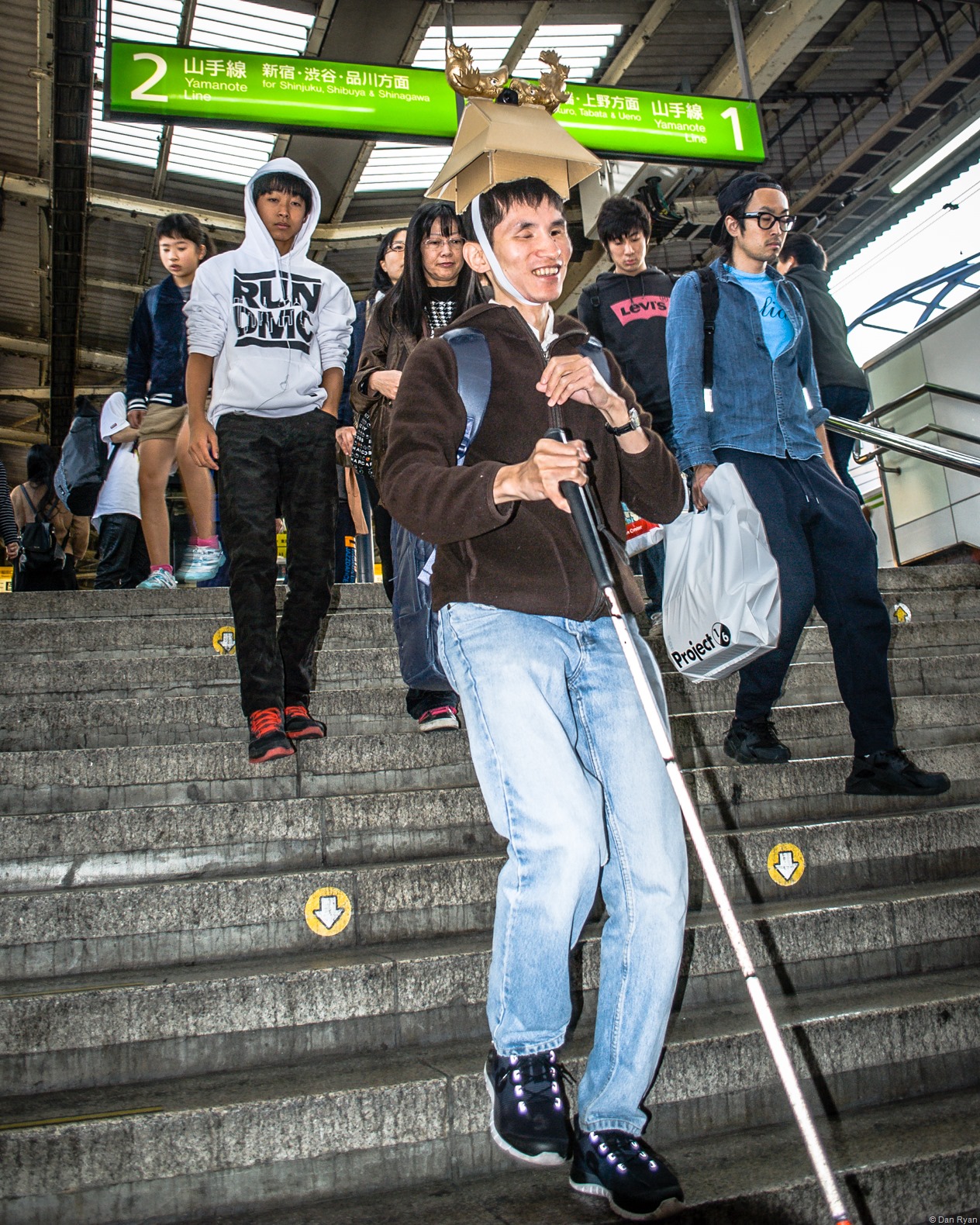
(Takadanobaba Station, Tokyo 2015)
Kyoto, in motion and at rest
I was wandering around Gion, Kyoto one morning last November, checking out what kind of activity beats in Japan’s cultural heart before the typical white collar work day begins. It was a Tuesday around 8:30 a.m. Most shops and restaurants in Gion don’t open that early so it seemed like only essential infrastructural stuff was happening.
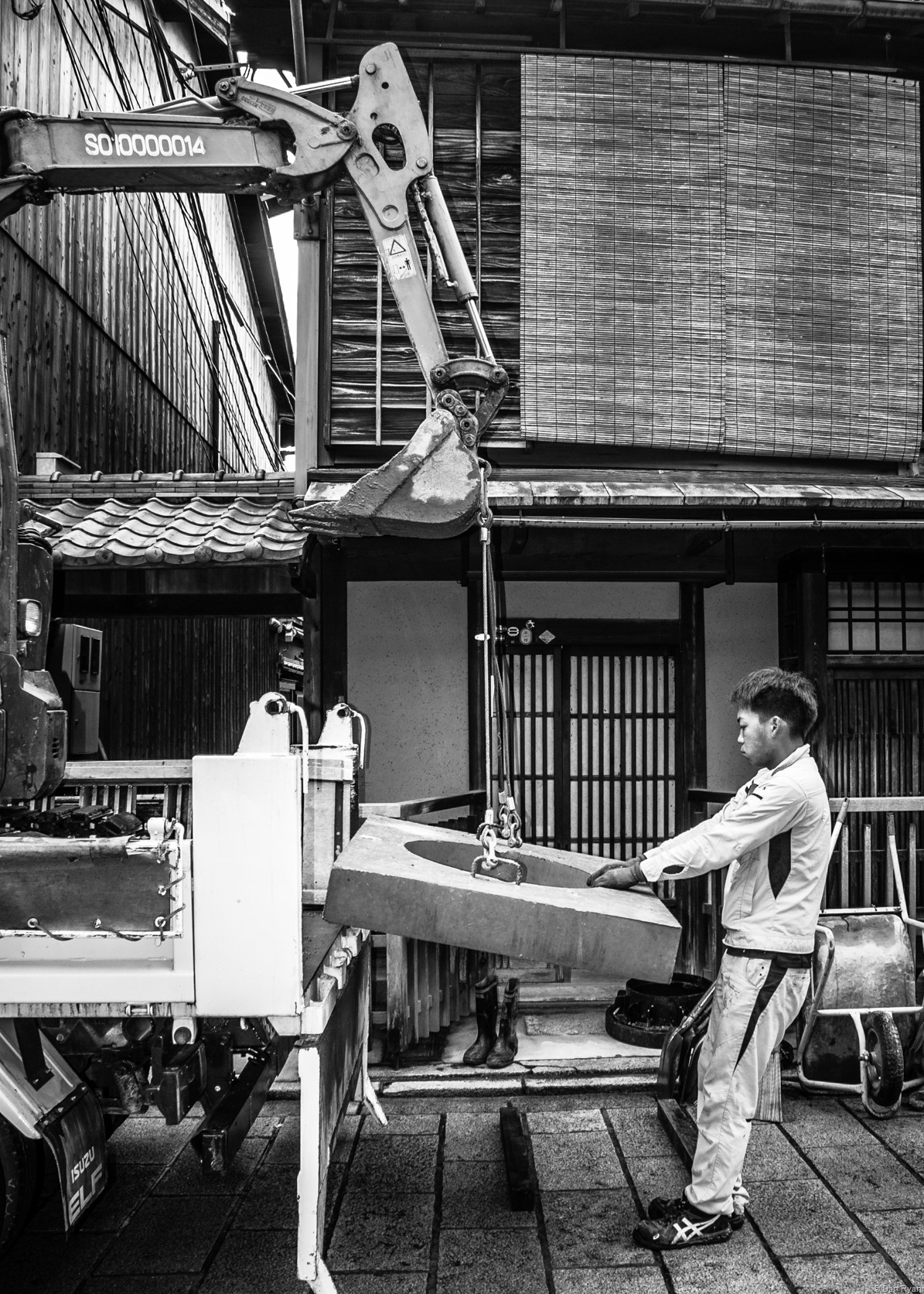
There was this fellow and his crew, installing a new hunk of concrete among the paving stones on Shinbashi Dori to replace the frame around a manhole cover leading to a storm drain…
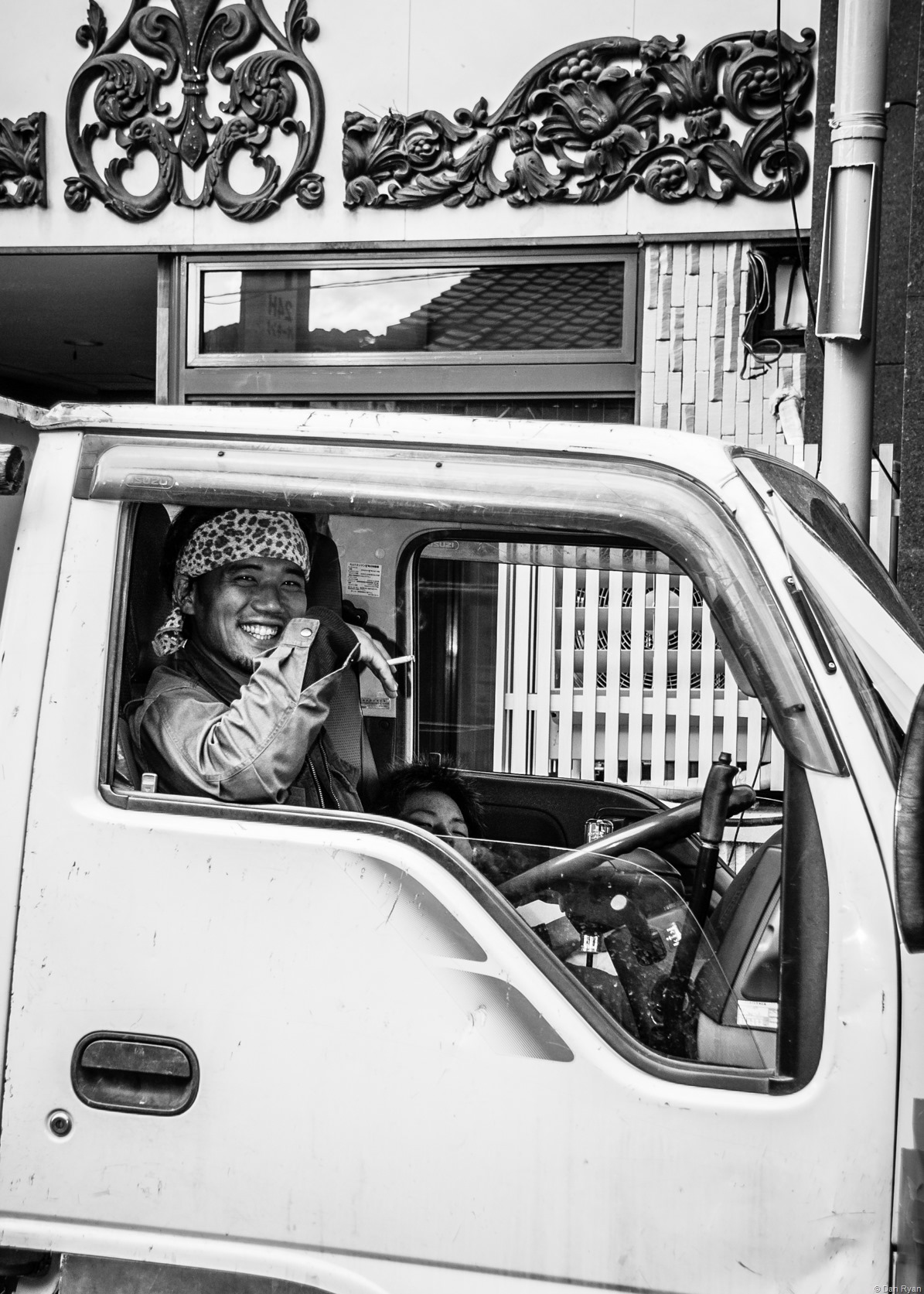
Around the corner on Yamato Oji Dori, this fellow was taking a smoke break from unloading construction materials from the back of the truck he was in. One of his co-workers was slumped down asleep in the seat next to him. They were parked in front of a restaurant which looked like it was being renovated…
And that was just a morning, in passing, in a city the definitely sleeps but also gets up early and ready to work.
(Gion, Kyoto, Japan 2015)
Old birds
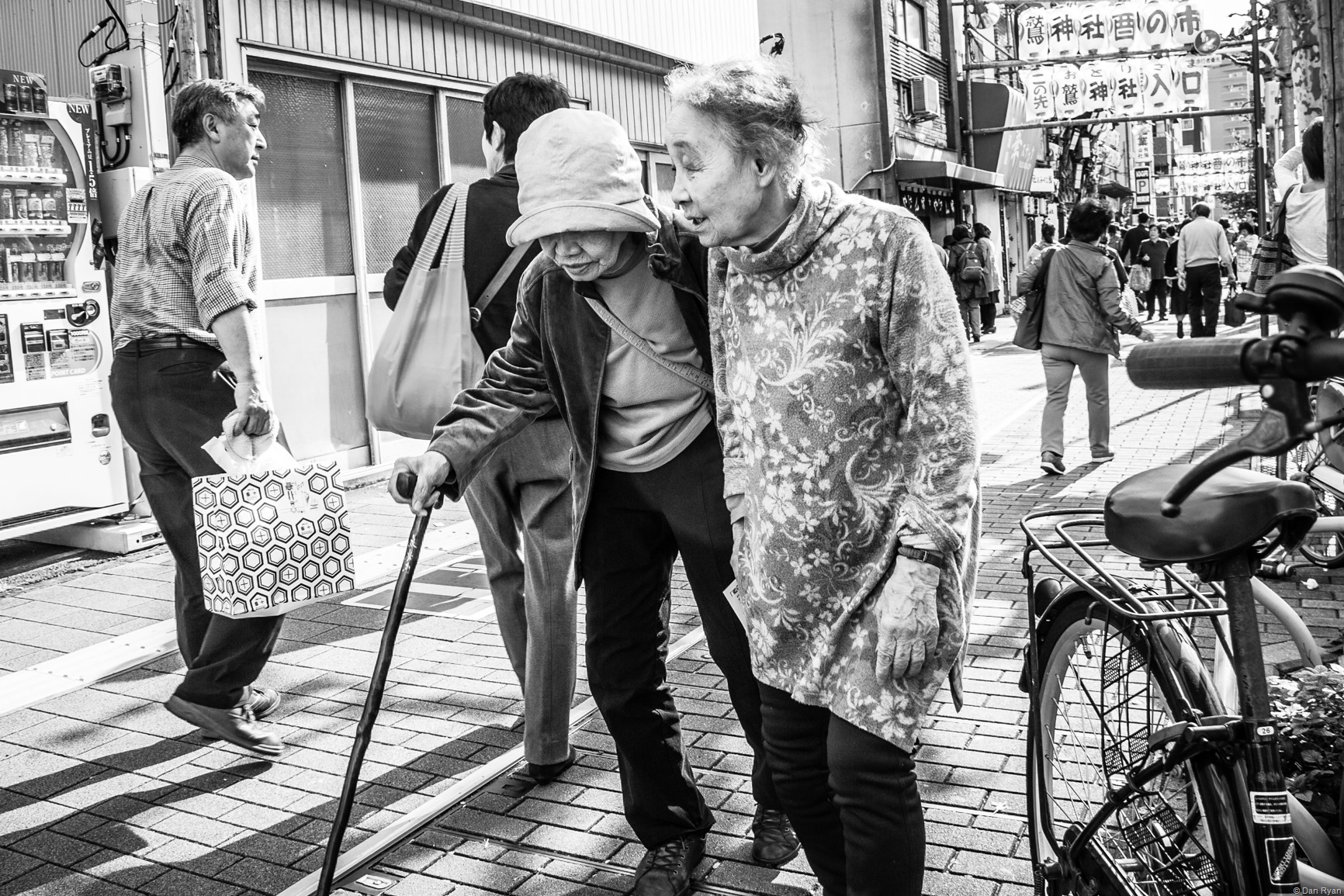
They moved and talked the way old Japanese ladies often do, a bit hunched over but with animation and purpose. The sidewalk was crowded with people, most of them heading to a nearby Asakusa shrine for a ‘rooster’ day street market fair. But these ladies kept walking and talking, focused on intently each other, protected by that particularly Japanese force field which prevents anyone on a Tokyo sidewalk from getting in their way.
—————-
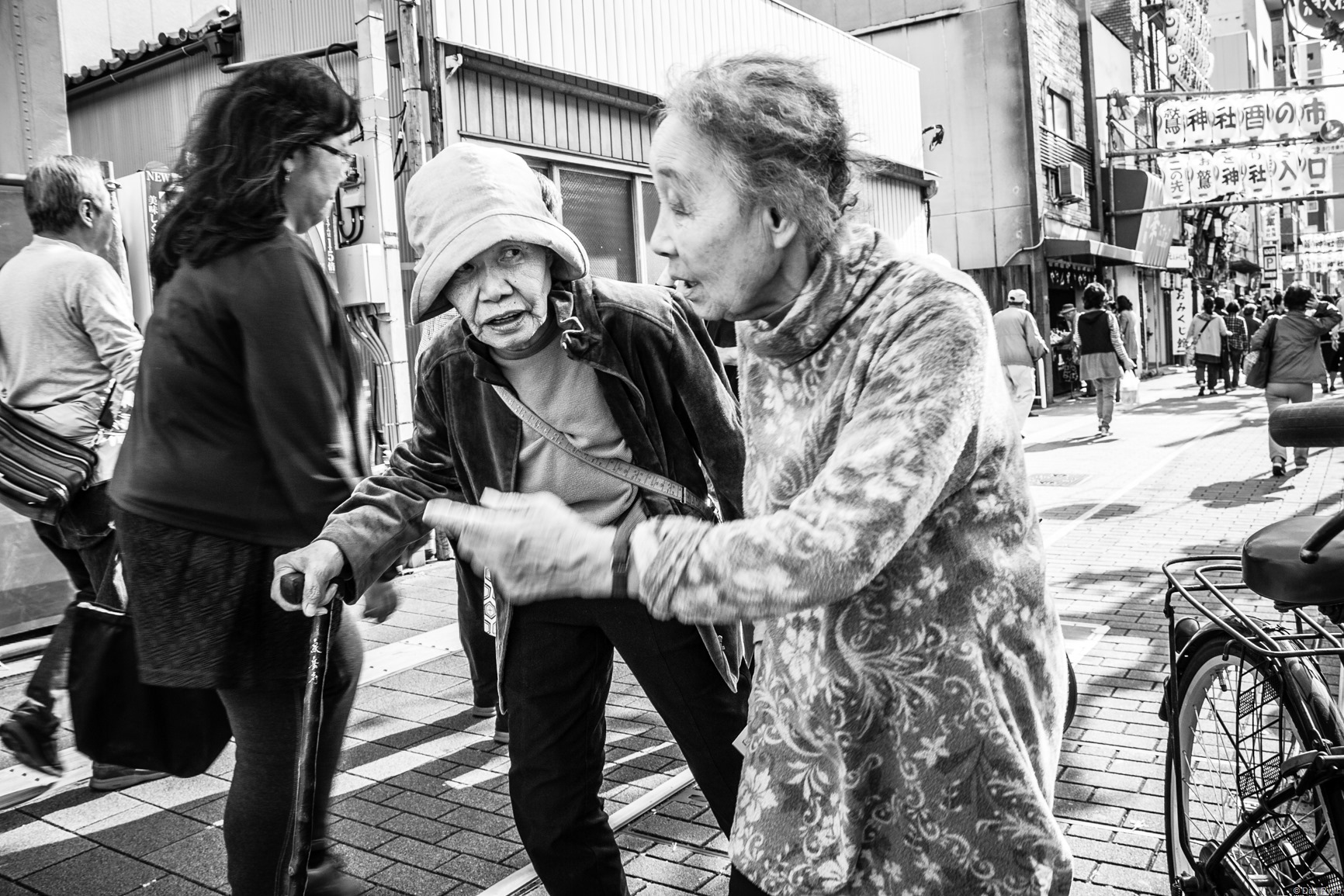
(Asakusa, Tokyo 2015)
Golden Guys
My wife and I were walking through the normally quiet and deserted midday streets of Golden Gai in Shinjuku. Suddenly I heard voices singing loudly to a very mainstream-sounding J-pop song. I followed the raucous sounds to a little dive which, unlike the other dives around it, had its front door wide open. Inside a bartender and three customers were joyously boozing it up and singing like contestants trying out for a television talent show.
And so, after calling my wife over to have a look we unexpectedly found ourselves sitting in a teeny Golden Gai bar ordering drinks at 12:30 in the afternoon.

The place is called Yoshida Shōten (よしだ しょてん). This is Getta, the bartender and, presumably, the owner of the joint. He charged my wife and I ¥500 each for cover, and ¥700 apiece for two Japanese whiskies and a regular bottle of Asahi Super Dry. He knew some English, was very accommodating, and had a wry sense of humor. His place had various types of garishly-colored Japanese toys pinned to the walls, and small baskets of packaged sweet and savory Japanese snacks on the bar. He seemed to know what he was doing and how he wanted his place to be.

One of Getta’s customers, who didn’t give a name but whom Getta described in English as ‘a crazy boy’. I sat next to this man, who also spoke a little English. He was quite nice and outgoing, though shy of my camera, and I think he told me he had recently been diagnosed with a serious medical condition, which I won’t name here. But it did make me feel like an asshole for smoking a cigarette next to him. He didn’t seem to mind, though.

Another customer with whom my wife and I drank. A handsome fellow, also outgoing and friendly, but I don’t recall if he gave a name or not. He did most of the singing when Getta had the music playing over the bar’s speaker system. And he had a pretty good voice.

My wife and I were delighted to have the chance to drink in a Golden Gai bar, but it was early in the day for us and after sharing two whiskies and a beer we knew we had to press on with our day. So we paid Getta what we owed him, and said our goodbyes with smiles and our cameras. Despite having lived in Japan in the late ‘80s and visiting Tokyo four times since 2008, I had never had drinks in Golden Gai before. So stumbling across this lively little place was a real treat for me. What made it so special, of course, was the friendly warmth of the people there.
So, thanks gents.
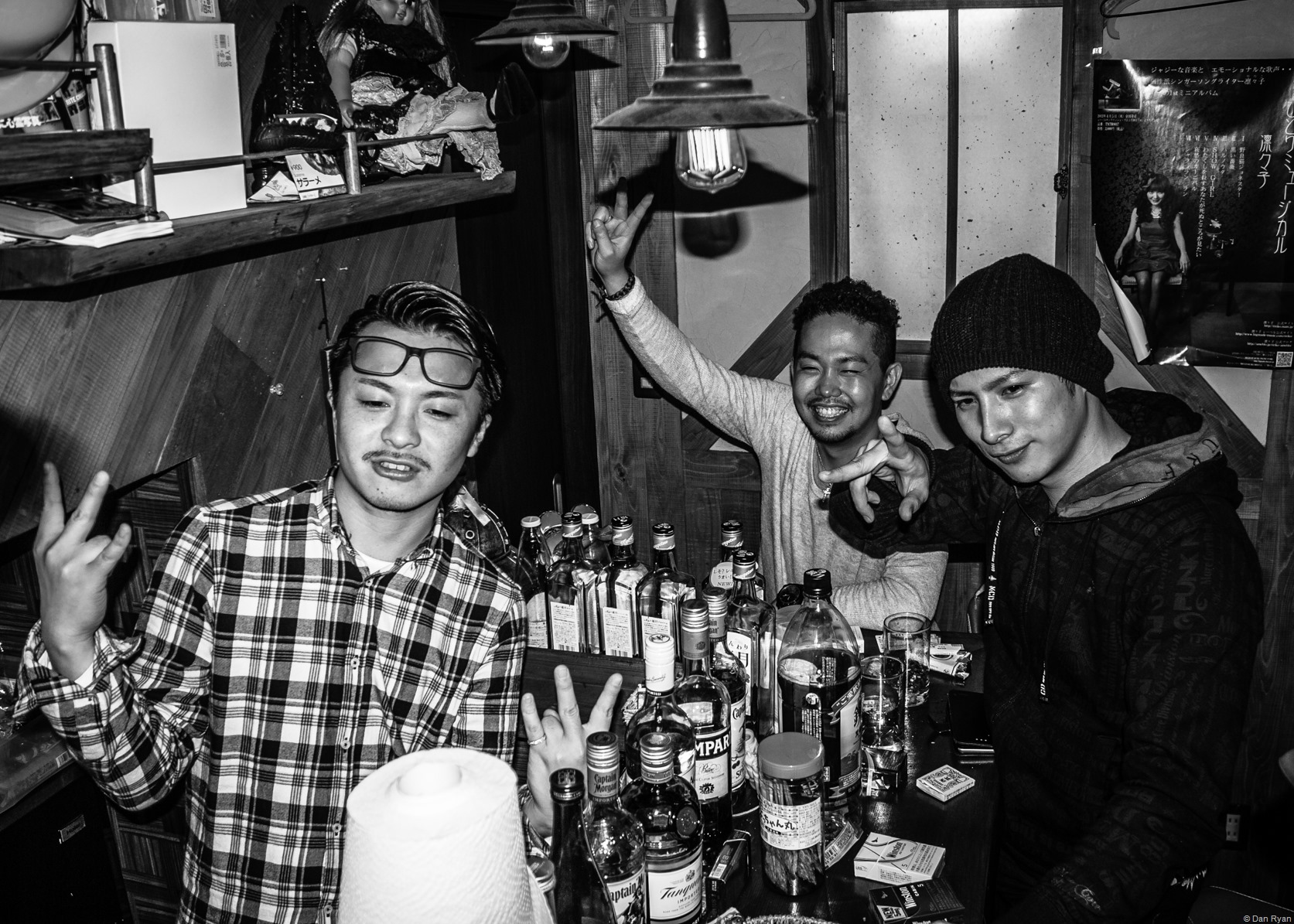
(Golden Gai, Shinjuku, Tokyo 2015)
Yakuza leisure dōjō
In Asakusa at Kamiya Bar (神谷バー) you never know who you might meet. My wife and I were drinking there one night last November with an Australian friend and her Japanese husband. The tables in Kamiya Bar are packed closely together, so we couldn’t help notice that the people at the next table were having a hell of a good time.
I took a chance and asked if I could photograph them. They happily agreed.

The fellow in the hat seemed to be the leader, or at least he was paying for most the drinks. He was particularly friendly, so I asked for his photograph as well. He smiled and agreed. I got up from my chair and prepared to take a few shots.
But as I did my Australian friend pulled me close and said quietly into my ear “Careful, Dan, those guys are dangerous.”
“What do you mean?” Then I thought for a second and it dawned on me.
“Yakuza?” I said.
She pursed her lips and nodded, then let me go about my photographic business.
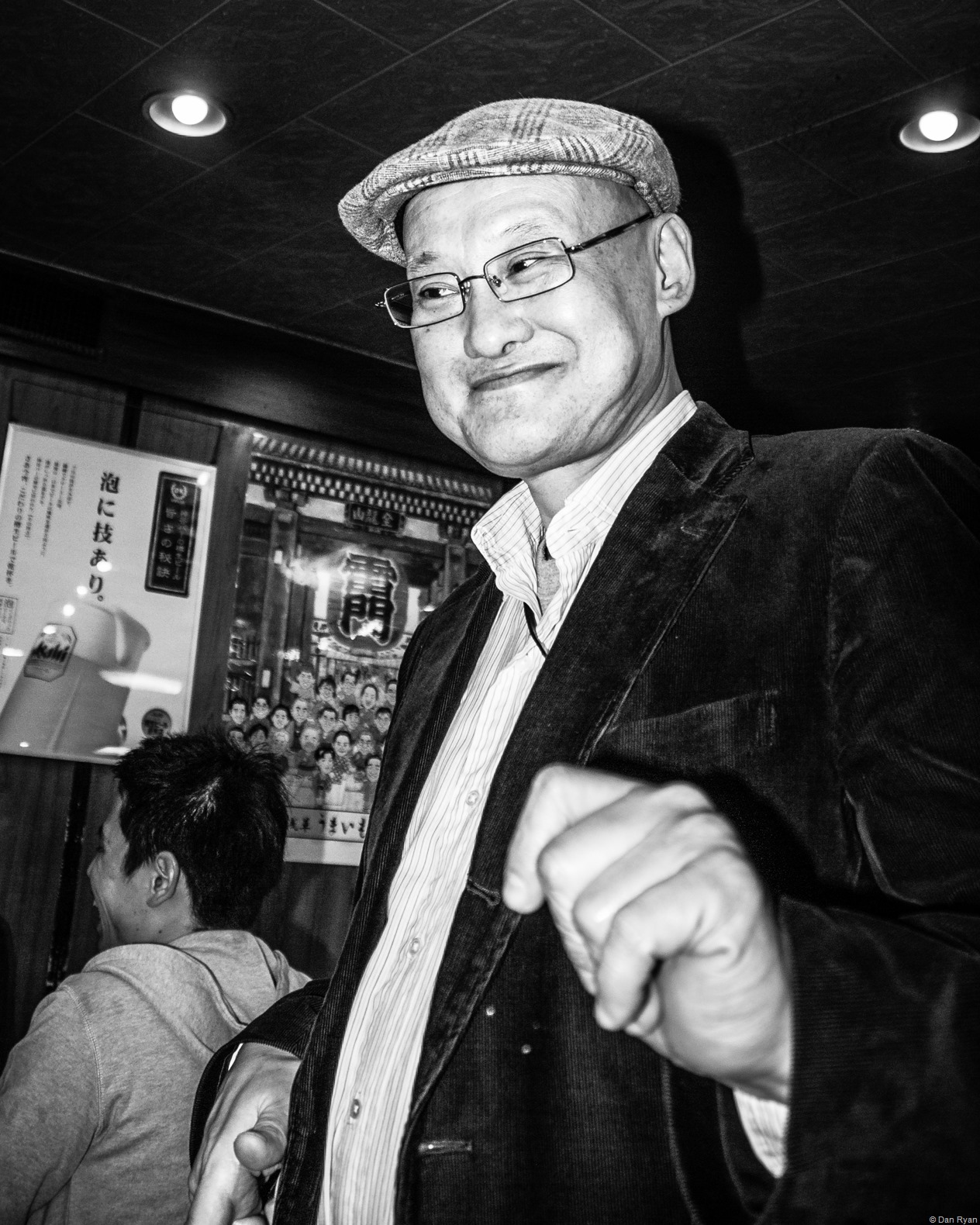
When I finished I sat at our table and spoke again quietly with my Australian friend.
“How do you know they’re yaks?”
She said “I used to work as a secretary for a Shinjuku real estate rental company. When they hired me, I just thought they wanted a white foreign girl who could speak fluent Japanese.”
Then she lowered her voice to an almost inaudible whisper. Whispers are almost impossible to hear in Kamiya Bar, but we managed.
She said “After a few years, I figured out yakuza owned the company. I was working for yakuza. They were in and out of where I worked all the time. So I know them. Those are low-level guys, but they’re still dangerous.”
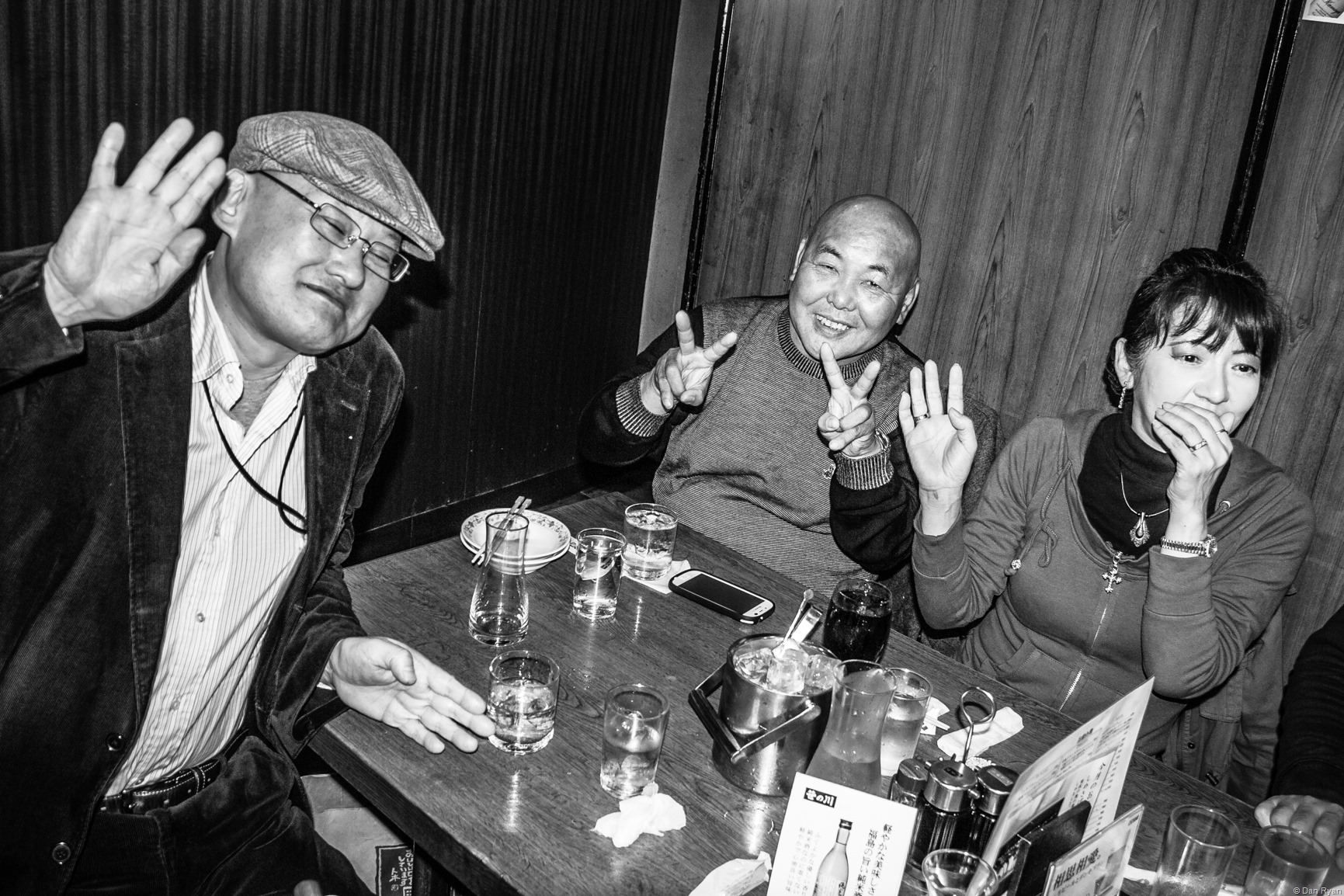
She had lived in Japan for 18 years, and I trusted her implicitly. Yet her concern didn’t match the friendly, easy-going vibe I felt from the table next to us. I didn’t feel threatened, but I also didn’t want to keep imposing my camera upon yakuza having drinks. So I shot one last photo of them, thanked them in the best horrible Japanese I could manage, and rejoined my wife and our friends at our table.
After that we drank more beer and laughed, and even had a denki bran or two. I looked over at the yakuza every few minutes or so, raising my glass to them when they noticed me. I was happy I had met them, intrigued when my Australian friend told me what they were, and overjoyed that I was with my wife and my friends at Kamiya Bar.
(Asakusa, Tokyo 2015)
Squinting at another reality
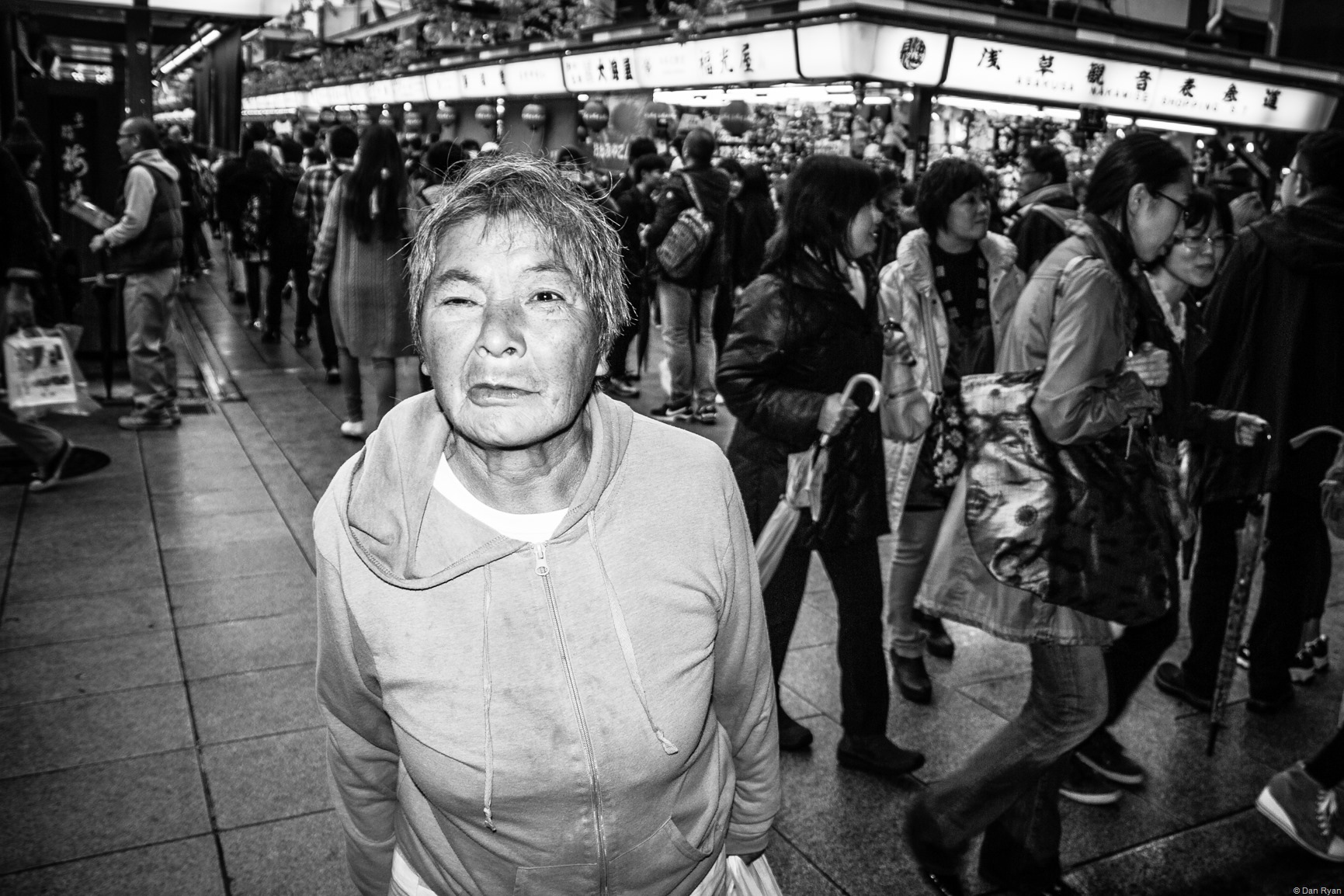
She was shuffling around Nakamise Dori, the shopping boulevard that leads to Sensō-ji in Asakusa. She touched a lot of elbows trying to speak to people who pulled away and ignored her. This did not phase her. She kept moving through the crowd, sizing up the passersby with a laser-sharp focus that seemed to cut through the communal illusion that we are all okay and everything will be fine…
(Asakusa, Tokyo 2015)